Spectra Fold: A Designer’s Take on Color Fonts for Modern Web Layouts
I was staring at a blank hero section on a client’s landing page, trying to break the monotony of standard sans-serif headers. The brief called for something playful yet polished—a visual hook that would stop the scroll without sacrificing readability. That was when I pulled up Spectra Fold. As a web designer who spends hours tweaking pixel-perfect layouts and testing responsive typography, I don’t often get excited by new typefaces unless they solve a specific problem. But Spectra Fold offered something different: a creative font set that felt like a design asset in itself.
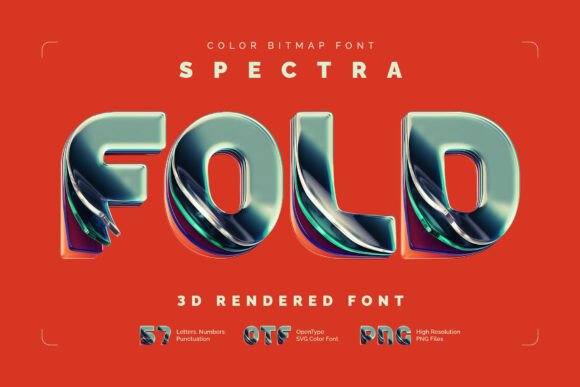
This isn’t just another monochrome display font. It is a color bitmap OpenType-SV font featuring 3D letters with smooth, rounded shapes made of shiny glass layers folded like a page. For digital creators looking to add depth and personality to their brand identity, this tool opens up a new way to think about hierarchy and engagement.
The Visual Appeal of Glass-Layered Typography
When you first load Spectra Fold into your design software, the immediate draw is its texture. Unlike traditional fonts that rely on stroke weight or contrast to create interest, Spectra Fold uses simulated lighting and material depth. The "folded page" effect gives each character a tactile quality, making it feel less like text and more like an object sitting on the screen.
In the context of web design, where flat design has dominated for years, this slight departure into pseudo-3D can be refreshing. However, it requires careful handling. The glossy, rainbow-like gradients inherent in color fonts can easily become overwhelming if used as body copy. Instead, I found its true strength lies in its ability to act as a focal point. It works beautifully as a premium font for headlines where you want to convey creativity, innovation, or a modern, youthful energy.
Testing Readability in Real-World Layouts
My first test case was a boutique online store redesign. The goal was to create a welcoming atmosphere for handmade goods. I placed Spectra Fold in the main hero banner over a soft, neutral background image. Initially, I worried about the contrast between the colorful glyphs and the photographic elements behind them. But because the font has a distinct outline and shadow effect from its 3D rendering, it maintained enough separation to remain legible.
However, readability checks are crucial. When I scaled the font down for mobile devices, the intricate details of the "glass layers" began to blur slightly on smaller screens. This is a common trait with complex color fonts. My advice? Use Spectra Fold for large-scale impact—hero titles, campaign banners, and promotional graphics—but never for navigation menus or long-form paragraphs. On mobile, ensure the text size is substantial enough to preserve the integrity of the fold effect. If the letters become too small, the visual charm turns into noise.
Strategic Placement for Maximum Impact
Throughout the project, I experimented with different placements to see how Spectra Fold influenced user scanning behavior. Here is what worked best:
- Hero Sections: As a primary headline, it immediately signals that the brand is creative and detail-oriented. It captures attention faster than a plain text header.
- Call-to-Action (CTA) Areas: While I wouldn’t put a whole button in Spectra Fold, using it for short phrases like "Shop Now" or "Explore" adds a touch of luxury and fun. It breaks the pattern of standard buttons and draws the eye.
- Blog Graphics and Social Media Assets: For course creators and bloggers, this font is perfect for featured images. It stands out in crowded social feeds and reinforces a cohesive visual style across platforms.
- Section Dividers: Using short words or single letters in Spectra Fold as decorative accents between sections can guide the reader’s eye smoothly down the page.
One thing to note is that Spectra Fold is not ideal for supporting typography. It lacks the neutrality required for body text. Mixing it with dense paragraphs would fatigue the reader. Instead, pair it with a clean, simple sans serif font for your main content. This contrast creates a balanced visual hierarchy, allowing the decorative font to shine while keeping the information accessible.
Font Pairing and Brand Consistency
Building a strong brand identity involves balancing personality with professionalism. When pairing Spectra Fold, I recommend sticking to minimalistic typefaces for the rest of your layout. A geometric sans serif or a humanist sans serif works well because they don’t compete with the complexity of the folded glass effect.
For example, in a coaching website project, I paired Spectra Fold for the tagline with a clean, readable sans serif for the bio text. The result was a site that felt approachable yet authoritative. The color font added warmth and uniqueness, while the neutral body text ensured clarity. This combination respects the user’s need for quick information retrieval while still delivering an engaging aesthetic experience.
If you are designing for a more editorial look, such as a high-end fashion blog or a portfolio site, you might consider pairing it with a subtle serif font for secondary headings. This creates a sophisticated tension between the modern, playful color font and the classic elegance of serif typography. Just ensure the weights complement each other so the layout doesn’t feel disjointed.
Technical Considerations for Web Implementation
Before integrating Spectra Fold into a live website, there are practical steps every designer should take. First, check the file formats and webfont availability. Since it is an OpenType-SV font, support varies across browsers and devices. Ensure your hosting solution supports variable fonts or color font technologies properly to avoid fallback issues.
Also, review the included styles. Does the set offer multiple weights or variations? Even though it is primarily a display font, having options allows for better flexibility in your layout. Check for multilingual support if your audience is global; color fonts sometimes struggle with special characters or non-Latin scripts.
Licensing is another critical factor. Always verify the commercial font license before using Spectra Fold in client projects, online stores, or digital templates. Some licenses restrict usage to print only, while others allow broad web use. Understanding these terms protects your business and ensures ethical use of design assets.
Final Thoughts on Digital Creativity
Spectra Fold is more than just a pretty typeface; it is a strategic tool for enhancing user engagement through visual storytelling. By understanding its strengths as a decorative element and respecting its limitations regarding readability, designers can create websites that are both beautiful and functional. Whether you are building a product landing page, a creative portfolio, or a small business website, adding a layer of textured typography like Spectra Fold can elevate your brand presence and make your digital space memorable.