Charm and Chivalry Typeface Review: A Pastel-Powered Branding Tool
I was staring at a blank brand board, trying to find the right visual voice for a boutique skincare line that wanted to feel whimsical but grounded. The client loved soft aesthetics but feared looking too childish. That’s when I pulled up Charm and Chivalry. It wasn’t just another decorative font; it was a full-color display typeface that immediately shifted the energy of the layout. As an experienced brand designer, I’ve tested countless creative fonts, but few offer the immediate character and structural integrity needed for serious commercial work. This review breaks down how Charm and Chivalry performs in real-world branding scenarios, from logo drafts to packaging mockups.
The Visual Personality of Charm and Chivalry
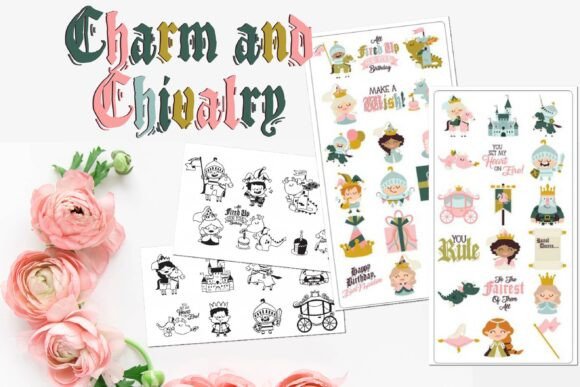
At first glance, Charm and Chivalry screams fantasy. The description promises pastel-colored royalty, dragons, castles, and more, and it delivers exactly that. But unlike many novelty fonts that sacrifice legibility for gimmickry, this bundle is built on a solid typographic foundation. It features one full-color font with an alt case of additional colors for each letter. This means you aren’t stuck with a single static look. You can swap out the "dragon" version of a letter for a "castle" or "royal" variant depending on the context.
The mood is undeniably playful yet refined. The pastel palette—think soft pinks, mint greens, and gentle blues—evokes a sense of nostalgia and warmth. It feels like stepping into a storybook garden. For designers working on brands that need to communicate charm without sacrificing professionalism, this typeface strikes a delicate balance. It’s not a script font, nor is it a standard sans serif font. It is a distinct display font that commands attention through color and form rather than weight or spacing alone.
Testing in Real Branding Projects
To see if Charm and Chivalry could hold up under pressure, I applied it to several different design assets for a fictional handmade shop branding project. Here is how it performed across various mediums:
- Logo Design: When used as a primary logo mark, the font’s unique glyphs acted as illustrations themselves. However, I found that using the full name of the brand in this font can be overwhelming. Instead, I used it for the main wordmark and kept supporting text minimal. The dragon alternate for the letter 'D' added a subtle narrative element that clients loved.
- Packaging Mockup: On product labels, the color variations helped create visual hierarchy. By mixing the royal and castle alternates, I created a pattern-like effect that drew the eye to key product benefits. It worked exceptionally well for tea boxes or bath bomb packaging where tactile and visual appeal are crucial.
- Social Media Graphics: For Instagram posts, the font served as a powerful headline tool. Because it is a color font, it required no extra graphic elements to pop. A simple quote overlay using Charm and Chivalry felt complete and polished, saving hours of illustration time.
- Web Design: In the hero section of a website header, the font provided instant personality. However, I had to ensure the background was clean and uncluttered. The complexity of the glyphs meant they competed with other visual elements if the layout was too busy.
Readability and Hierarchy Considerations
While Charm and Chivalry is visually stunning, it is not a workhorse font. It is best used as a headline font, accent font, or decorative font. Attempting to use it for body text or long-form editorial design would quickly fatigue the reader. The colorful glyphs, while charming, reduce legibility at smaller sizes. For subheads or descriptive copy, I paired it with a clean sans serif font. This modern typography system allowed the brand identity to shine in the headlines while maintaining clarity in the details.
Visual hierarchy is critical when using such expressive typefaces. Because every letter has potential variation, the eye can get distracted by searching for the "right" glyph. To maintain consistency, I established a rule: use specific alternates only for emphasis or thematic relevance, not randomly. This approach preserved the professional tone of the brand identity while leveraging the font’s creative potential.
Font Pairing and Technical Details
One of the strengths of Charm and Chivalry is its versatility in pairing. Since it is a highly stylized display font, it needs a neutral partner to ground it. I found that a geometric sans serif font worked beautifully alongside it, creating a contrast between the whimsical and the structured. Alternatively, a classic serif font could add a touch of elegance, leaning into the "royalty" aspect of the design.
From a technical standpoint, the bundle includes multiple styles and alternates, which is essential for dynamic branding. The file formats included standard desktop versions, making it easy to integrate into Adobe Creative Cloud applications. For web design, checking for webfont availability is important. If a web-safe version isn't available, designers may need to rely on image replacement techniques or CSS tricks to render the color fonts correctly across browsers.
What It’s Not For
It is equally important to know where this font falls short. Charm and Chivalry is not suitable for formal corporate use, legal documents, or any context requiring high-density information. If your brand needs to convey authority, seriousness, or neutrality, this typeface will undermine those goals. It is also less effective for international markets unless the font supports multilingual characters adequately. Always test the full alphabet before committing to a brand system.
Practical Guidance for Designers
If you are considering adding Charm and Chivalry to your toolkit, here are a few practical steps to take before finalizing client work:
- Test Extensively: Create a mini brand board. Place the font on light and dark backgrounds. See how the pastel colors interact with your chosen palette.
- Check Licensing: Ensure you have the correct commercial license. Using a premium font in client work, merchandise, or print-on-demand products requires proper permissions. Do not assume personal licenses cover commercial branding.
- Limit Alternates: Decide on a set number of glyph variations to use per project. Too many changes can make the design feel chaotic rather than charming.
- Pair Wisely: Choose a supporting typeface that complements rather than competes. Simplicity in the secondary font allows Charm and Chivalry to remain the star.
In conclusion, Charm and Chivalry is a delightful addition to the world of color fonts. It offers designers a way to inject narrative and personality into their projects without relying on external illustrations. Whether you are designing a bakery logo, a creative studio identity, or social media graphics, this typeface provides a unique visual language. Just remember to use it with intention, respecting its limitations and leveraging its strengths. When done right, it transforms ordinary design assets into memorable brand experiences.